
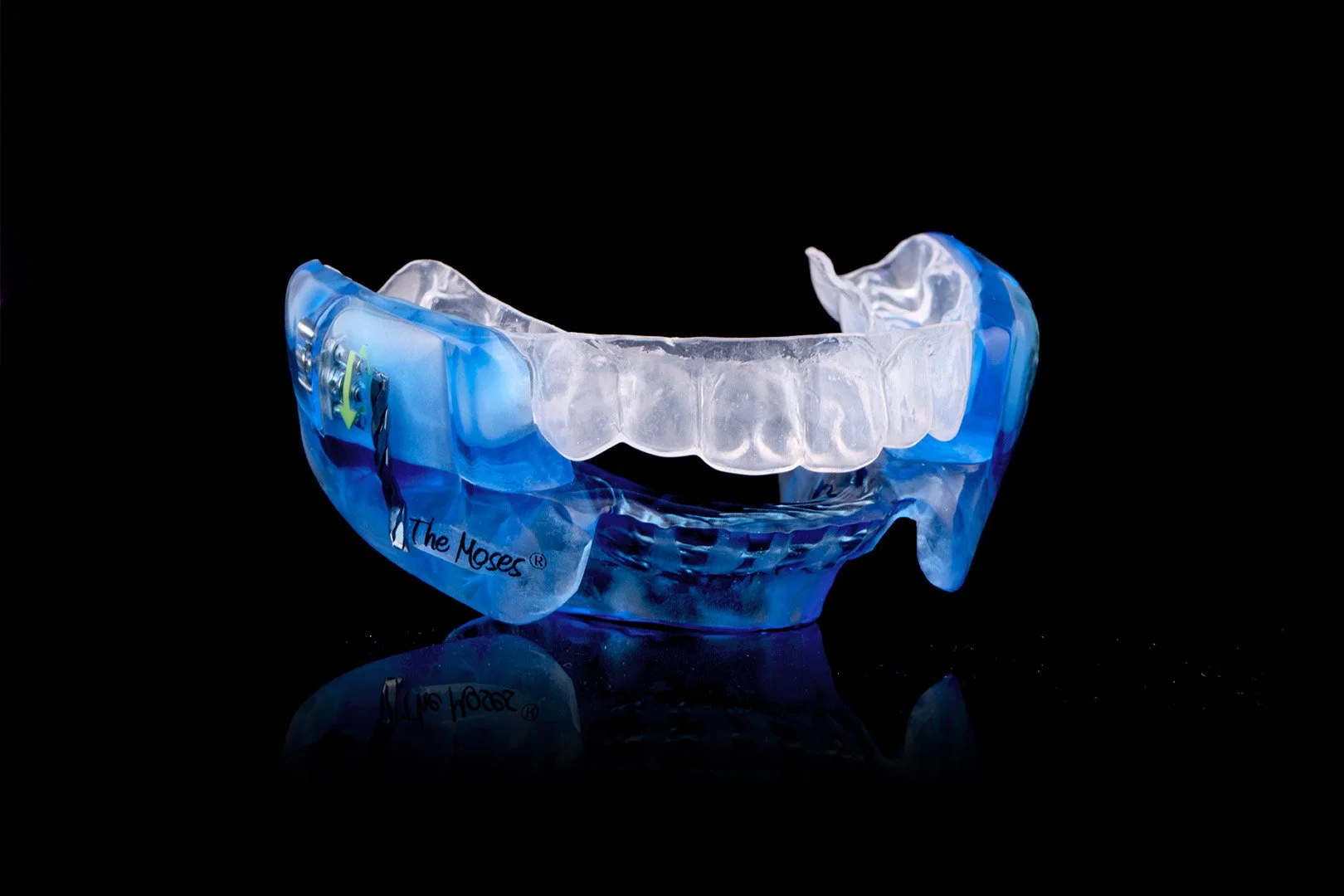
The Moses®
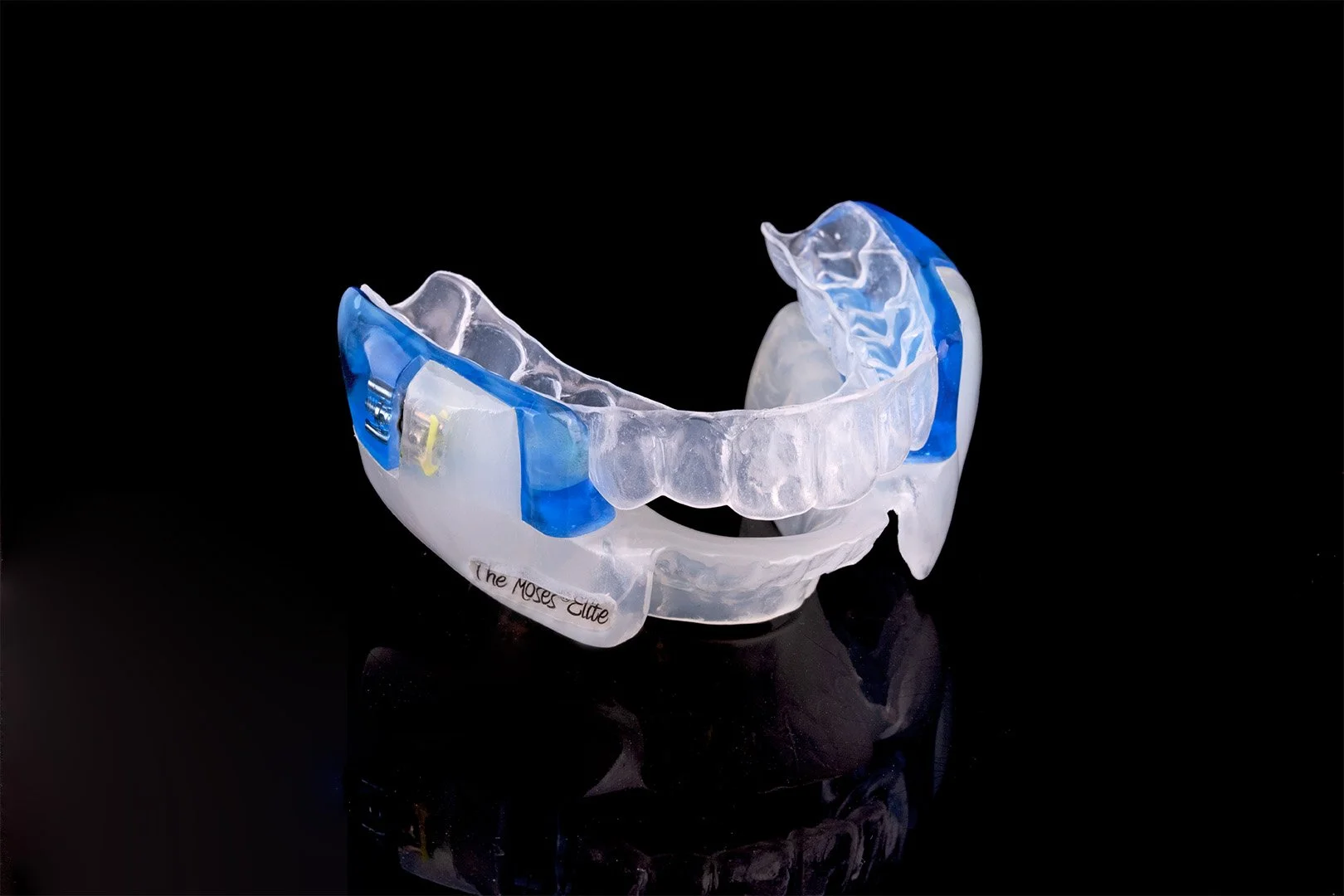
The Moses® Elite
The Moses®
The Moses® appliance has been shown to facilitate tongue advancement, reduce elevator muscle activity, reduce clenching, and decrease bruxism. The two-part design is comfortable, allowing the patient to close their lips, talk, and even sip water.
The Moses® Elite is the ideal appliance for patients with bruxism. The body is fabricated with VisiClear, which provides additional strength and flexibility.
-
The Moses® appliance has been shown to be the most effective oral airway dilator available for dentists to use in the treatment of obstructive sleep apnea (OSA). By incorporating tongue management, the Moses® appliance has improved on the effectiveness of simple mandibular advancement splints.
The Moses® appliance was invented by Dr. Allen Moses DDS, DABCP, DABDSM. Dr. Moses holds a faculty appointment as an assistant professor of Rush University Medical School in the Department of Sleep Disorders. He is a Diplomate of both the American Board of Craniofacial Pain and the American Board of Dental Sleep Medicine. Dr. Moses selected Modern Dental Laboratory USA as exclusive manufacturer and distributor of the Moses® appliance worldwide.
To order The Moses® appliance for your patients, complete our laboratory prescription and include upper and lower PVS impressions, and a bite registration. Adherence to the impression and bite protocol recommended by Dr. Moses is strongly encouraged. Includes 1-year manufacturer’s warranty.
-
Primary indication is for the treatment of snoring & obstructive sleep apnea in the mild to moderate range, as diagnosed and prescribed by a board certified sleep physician. The patient must have at least 9 healthy teeth on each arch.
-
• Central or Mixed Apnea
• First-line therapy for Severe OSA
• Under the age of 18
• Periodontally involved teeth, loose dental work, multiple missing teeth, or any oral condition that would be adversely affected by wearing a dental device that maintains the mandible in a protrusive position. -
FAQs
-
Yes, the patient must wear the flexible maxillary component in order to prevent tooth movement, increase stability, and help with alignment. The mandible is held in protrusive position and exerts pressure to recede. If the upper component is not worn, teeth may move from both tongue and mandibular pressure. The upper retainer splints all maxillary teeth and holds the mandible forward.
-
The jaw relationship established by your bite registration will be the exact jaw position used in the fabrication of The Moses® appliance. You cannot wind the screw back from the starting position, so be conservative when taking your protrusive bite registration. You are able to titrate the device by activating the screw mechanism with the key provided (1 turn = 1/8th of a mm). The screw has a 6 mm thread.
-
The side screws are to be used by the doctor (or the patient, if instructed accordingly) for mandibular advancement (titration) to establish the optimal position for patient efficacy. A conservative starting point is an advantage and comfortable for the patient. Occasionally, the midline may need unilateral advancement of the screw on the side where the patient is experiencing pain. A small “key” is sent to you with each appliance.
-
Our stringent quality systems ensure that The Moses® device returned to you is manufactured to very high standards. The device has been specifically designed for patient comfort and efficacy; any changes may alter the overall function. It would be rare for any structural adjustments to be needed.
-
No, they will not. This is due to the appliance's design and the bite registration protocol. It encourages good lip seal, which in turn prevents the lower anterior from flaring forward, and provides room for the tongue to sit anteriorly and out of the airway.